
The efficient and sustainable generation, storage, transmission and use of energy is arguably the key challenge facing society in the 21st century, and is one in which physics can play a vital role. For most of the devices and systems that we rely on in our daily lives, such as computers, electricity grids, solar cells or batteries, the efficiency with which these devices use, transmit or store energy is still significantly lower than what is theoretically possible based on established physical limits. In all these areas there are exciting opportunities for developing new advanced energy materials and devices that increase efficiency significantly and in this way reduce the cost and improve the sustainability of energy systems. At the same time this field of physics provides a context for exciting science as it creates opportunities for conceiving and testing new physical principles and paradigms that use energy in novel, more efficient ways. This is a highly interdisciplinary field of physics with close links to chemistry, materials science, engineering and even biology.
Research areas:
- Energy generation
- Energy transmission
- Energy storage
- Energy usage
My research in brief
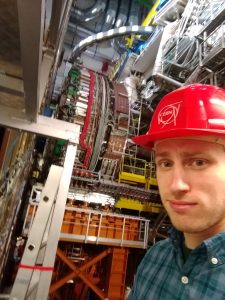
I histogram data made by Atlas, a titanic particle detector on the Large Hadron Collider. With international collaborators, I think about which histogramming will best test our physical models. We dream that, on one fateful day, our histograms will contradict the current standard model of particle physics.
Why I choose to study for a PhD at the Cavendish Laboratory
As the sun of summer 2018 blazed down upon JJ Thomson Avenue, I was stunned by its modern, vibrant architecture. So much so that I barely noticed the Cavendish from the outside. I chose this PhD because it was an opportunity to continue learning about fundamental physics and to work with a supervisor who shares my interests.
What I like best about my research experience at the Cavendish
Thai curry Thursdays. Hands down. That and the duck pond — though not at the same time. I imagine the birds are missing their crumbs during the pandemic. They cannot rely on food banks, unlike humans in the UK.
Activities that I take part in outside of studies
Hiking in the Swiss mountains was bliss, particularly when hopelessly lost and clambering up slopes in snow shoes. Since being kicked out for Covid, I am fantastically proud to have turned my parents’ lawn over for potatoes. Musical comedy is my lifeblood.
Future career plans
I love to think about what is really going on in the universe, so plan to work in a field which cares about its fundamentals. Since these PhD years have been an experience in software, I am beginning to increase my public programming profile.
Advice for prospective students
Talk to supervisors. Interrogate them. Learn not only their research interests, but what day-to-day work they expect from students. You and your skills are valuable, and they deserve a worthy home.
Previous
Next